Alone in the Studio: Why the Magic Only Shows Up When You Stop Performing for an Audience
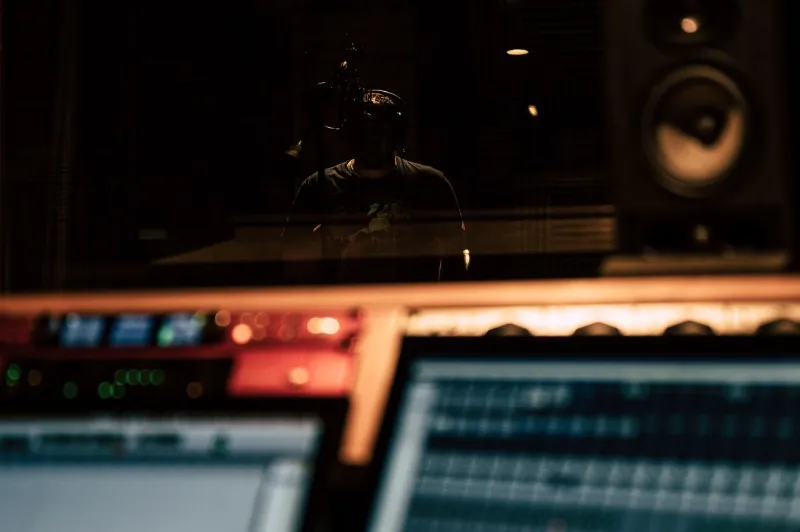
There's a particular kind of quiet that only artists know. It's not peaceful, exactly. It's a little uncomfortable, a little restless—the kind of silence that makes you want to reach for your phone just to fill it. But if you sit with it long enough, something starts to happen. Ideas surface. Weird, specific, completely-yours ideas that would never show up in the middle of a comment section or a group chat.
That quiet is where the real work lives.
And yet, we live in a world that practically penalizes you for going silent. The algorithm rewards consistency. Fans want access. Labels want content. Everyone has an opinion about what you should be making, and they're all one DM away. The pressure to be on is relentless—and for a lot of creators, it's quietly strangling their best work before it even gets a chance to breathe.
The Paradox Nobody Talks About
Here's the thing about creative isolation that doesn't get enough airtime: it's not a bug. It's the whole point.
Some of the most iconic work in music history was made by artists who deliberately stepped back from the noise. Think about how many legendary albums were recorded in the middle of nowhere, in some rented house or makeshift studio, completely cut off from outside input. There's a reason that happens. When you remove the audience—even an imaginary one—you stop second-guessing. You stop optimizing for reaction. You start making something true instead of something clever.
The paradox is that the more you share your process in real time, the more you start unconsciously shaping that process for the people watching it. You're no longer creating; you're performing the act of creating. And those are two very different things.
What Constant Visibility Actually Costs You
Social media isn't evil. Let's just be clear about that. Platforms like Instagram, TikTok, and YouTube have genuinely leveled the playing field for independent artists in ways that weren't possible fifteen years ago. The problem isn't visibility itself—it's the pace of it.
When you're posting daily, responding to comments, tracking analytics, and trying to stay relevant across three different platforms simultaneously, your creative bandwidth takes a hit. Not because you're lazy, but because attention is a finite resource. Every minute you spend managing your online presence is a minute you're not spending going deep on your craft.
There's also something subtler happening. The more feedback you absorb in real time, the more it starts to influence your instincts. A post performs well, so you lean into that sound. A concept gets ignored, so you quietly shelve it. Before long, you're not following your artistic gut anymore—you're following the data. And data is great for a lot of things, but it's a terrible compass for figuring out what only you can make.
Protecting Your Creative Sanctuary (Without Going Full Hermit)
So what's the move? You can't just disappear. You have fans who actually care about you, industry connections that require nurturing, and a career that doesn't run itself. Full isolation isn't realistic—and honestly, it's not even desirable. Human connection feeds creativity too. The goal isn't to go dark forever; it's to build a structure that gives your creative self room to operate.
A few things that actually work:
Set non-negotiable offline hours. Pick a window every day—morning, late night, whatever fits your rhythm—and treat it like a meeting you can't cancel. No posting, no scrolling, no checking. Just you and whatever you're working on. It sounds simple because it is. The hard part is actually doing it.
Create a physical separation between your making space and your sharing space. If you write songs in your bedroom, don't also scroll TikTok in your bedroom. Train your brain to associate that environment with creation, not consumption. Even small environmental cues make a real difference in how quickly you drop into a creative headspace.
Batch your content and your engagement. Instead of dripping out posts and responses throughout the day, set aside specific blocks of time for all things social. This way, you're not context-switching constantly, and your creative sessions stay protected.
Be intentional about what you share mid-process. There's a difference between bringing fans into your world and letting the audience into your studio before the work is done. Behind-the-scenes content can be meaningful without being invasive. Show the finished sketch, not every false start.
The Loneliness Is Telling You Something
Here's what nobody really prepares you for: the isolation of serious creative work can feel genuinely lonely, even when it's going well. You're sitting with ideas that don't exist yet, trying to pull something out of nothing, and that's an inherently solitary experience. There's no shortcut around it.
But that loneliness has information in it. When you feel it, you're usually close to something real. The discomfort of sitting alone with your work—without the distraction of likes or the validation of comments—is actually a sign that you're doing it right. You're in territory that hasn't been mapped yet. That's exactly where original work comes from.
The artists who figure this out early tend to build something that lasts. Not because they're more talented, but because they protect the conditions that let their talent actually show up.
Staying Connected Without Losing Yourself
Maintaining a real relationship with your audience doesn't require you to sacrifice your creative process. It just requires being thoughtful about how you connect, not just how often.
When you do share, make it count. A genuine, specific, heartfelt post once a week lands harder than five forgettable ones. Fans can tell the difference between an artist who's present and one who's just keeping up appearances. The goal is depth, not frequency.
And when you come back from a period of intense creative focus with something new—something that's fully baked, fully yours, built in the quiet—people feel that. They might not be able to articulate why it hits differently. But it does.
Because it was made when nobody was watching. And that's exactly why it matters.