Let the Robots Do the Paperwork: Building an AI Workflow That Still Sounds Like You
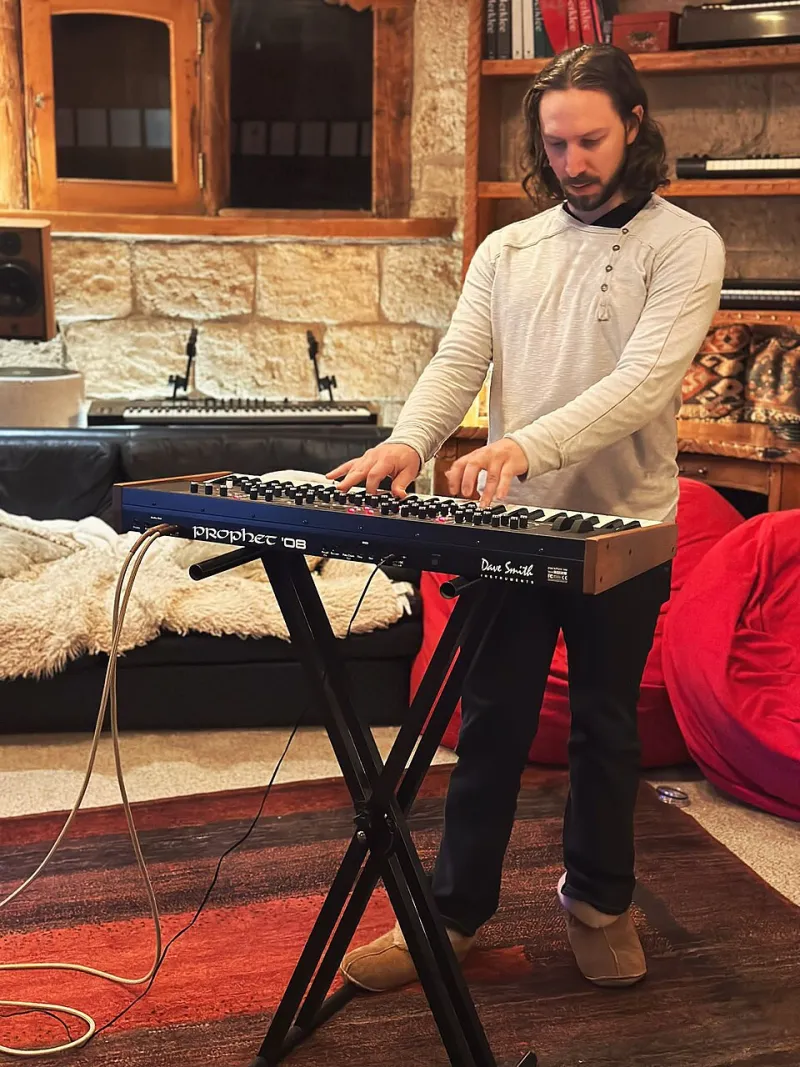
Photo: Clarinetdelune, CC0, via Wikimedia Commons
There's a version of this conversation where an indie artist swears off AI entirely, posts about it, and then quietly uses it to write their bio at 1 a.m. before a deadline. I've seen it. I've maybe been it.
The more useful version is the boring one: decide what the machine is allowed to touch, and then actually hold the line. Not because a blog post says so, but because whatever ends up on the record has to survive being listened to by a stranger in a car.
The new intern in the control room
Somewhere around the last couple of years, AI stopped being a novelty and became infrastructure. It's in your DAW's stem separation, your mastering plugin's reference matching, your distributor's pitch tool, your inbox's draft folder. Pretending it isn't there doesn't protect your sound. It just means you're using it badly and without a plan.
The artists I know who are happiest with their output right now treat it like a very fast, very confident intern. Great at prep. Terrible at taste. You would not let an intern pick the single.
Where it actually earns its keep
Admin. All of it. Metadata cleanup, split sheets, grant applications, visa paperwork drafts, press one-sheets, tour routing spreadsheets, caption variations, the fifth version of your bio that has to be 100 words instead of 250. This is the stuff nobody became an artist to do, and it eats entire weeks. Hand it over.
Reference work. Comparing your rough mix against a track you love, spotting where your low end is crowded, generating a loudness readout before you send stems to the mastering engineer. This is measurement, not creation. Measurement is fine.
Early drafting, with a fence around it. A chord scaffold to get unstuck. A title brainstorm to jog something loose. A list of ten terrible rhymes so you can find the eleventh one yourself. The rule I use: nothing that leaves the session as-is. Everything gets rewritten or thrown out. If a line survives untouched, it's not mine, and I can feel it when I sing it.
Where it has to stay out
Melody. If you can't hum it without a screen, it isn't yours yet. There's something about a melody that comes from your own body — your range, your bad habits, the note you reach for when you're tired — that a model reproduces as an average of everything and therefore sounds like nobody.
Lyrics, specifically the weird ones. Models sand down specificity. The name of the street, the brand of the cheap beer, the thing your mom actually said. That's the whole song.
Final taste decisions. Sequencing, which take is the real one, whether the bridge earns its length. Somebody has to be accountable to the listener, and that somebody is a person with a name on the cover.
A human-in-the-loop checklist
Print this. Tape it above the desk.
- Does every melody line trace back to a take I performed with my own hands or voice?
- Can I explain, in one sentence, why each lyric line is there?
- Have I listened to the finished version on a phone speaker and in a car, away from my monitors and away from the tool that made it?
- If I stripped the AI-assisted layers, would the song still stand up?
- Do I know which parts of this were machine-prepped, and can I say so plainly if asked?
- Is there anything on this track I'd be embarrassed to describe out loud to another artist?
- Does the release still feel like a thing I made, or a thing I supervised?
Seven questions. If you can't answer all of them cleanly, you're not done.
On disclosure and the tell
The disclosure question is going to keep moving. What I'd say now, in 2026: be accurate rather than performative. If a generated element is doing real work in the arrangement, say so — not as a confession, just as a fact, the way you'd mention a guest guitarist. Audiences are less scandalized by tools than the industry assumes. What they actually punish is being lied to.
And there's a tell. There's always a tell. It's usually not a glitch — it's smoothness in the wrong place. A bridge that resolves too neatly. A lyric that's grammatically perfect and emotionally generic. A vocal comp with no breath in it. Listeners may not be able to name it, but they feel it, and they skip.
What a Tuesday looks like now
Here's my honest week. Monday morning, the admin pile goes through a tool in about ninety minutes instead of a whole day, and I check every output before it goes anywhere. Tuesday and Wednesday, I write with the laptop half-closed — voice memos, one mic, no autocomplete. Thursday, reference analysis and revisions. Friday, taste decisions with coffee and no screen.
The point was never to keep AI out of the room. It was to make sure that when the record plays and someone asks who made it, the answer is a person — with a specific ear, a specific ache, and a specific reason for every choice on the tape.