Your Audience Shouldn't Live Inside an App You Don't Control
Let's talk about something that most creators don't fully reckon with until it's too late: every single follower you have on Instagram, TikTok, Spotify, or YouTube is technically not yours. They belong to the platform. You're borrowing access to them, and that access can be revoked, throttled, or completely restructured the moment some executive in a glass office decides to update the algorithm.
That's not paranoia. That's just the deal you agreed to when you signed up for free.
The good news? There's a way out of this dependency — and it doesn't require abandoning social media entirely. It just requires being strategic about where you actually invest your energy.
The Illusion of a Fanbase
Here's a number that should make every creator uncomfortable: the average organic reach of a business post on Facebook is somewhere around 2-5%. That means if you've spent years building 50,000 followers, roughly 1,000 to 2,500 of them will ever see any given post you make — unless you pay to boost it.
Spotify's model isn't much friendlier. Unless you're getting playlisted or running ads, discovery is largely dependent on the algorithm deciding your work is worth surfacing. And TikTok, for all its viral mythology, is famously inconsistent — a creator can go from 100K views to 3,000 views overnight for no clear reason.
None of this means these platforms are useless. They're genuinely powerful discovery tools. But discovery is the beginning of a relationship, not the whole thing. The mistake most artists make is treating their follower count like a community when it's actually more like a mailing list they don't own.
What Owning Your Audience Actually Looks Like
Owning your audience means having a direct line to the people who care about your work — one that doesn't depend on a third party's business model, mood, or quarterly earnings report. In practical terms, this usually means a few things:
Email lists. This is the unglamorous backbone of every creator who has managed to build something durable. An email list is yours. It travels with you if you switch platforms, if a platform shuts down, if you go through a rebrand. And the open rates — typically 20-40% for engaged lists — absolutely demolish what social media delivers. If you don't have an email list yet, that's the first thing to fix.
Discord communities. Discord has quietly become one of the most powerful tools for building tight-knit creative communities. Unlike social media, where your content competes with everything else in someone's feed, a Discord server is a dedicated space where your most engaged fans come specifically to be in your world. It rewards depth over breadth, which is exactly what you want.
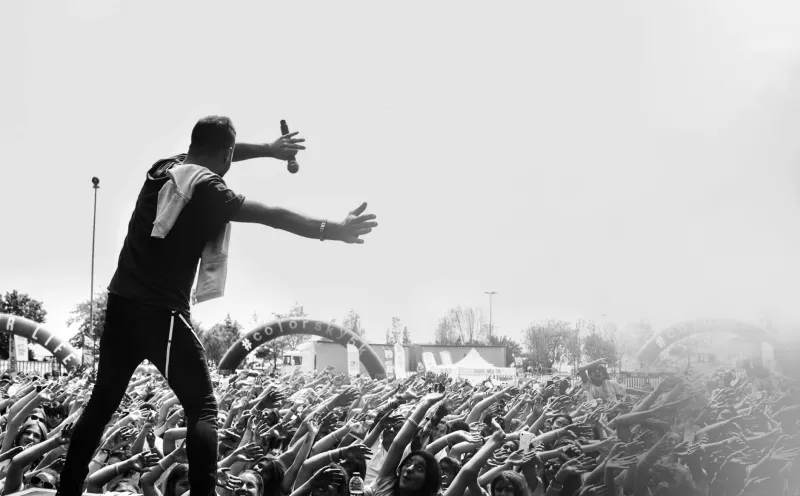
Live events and in-person connection. There is no algorithm that can replicate what happens when someone sees you perform live, meets you at a pop-up, or attends a workshop you host. These experiences create the kind of loyalty that sustains careers for decades. Even if you're not a touring artist, think about how you can create live touchpoints — a listening party, a Q&A, a local showcase.
Your own website. In 2024, having a real website — not just a Linktree — is still one of the most underutilized moves in an independent creator's playbook. Your site is your home base. It's where you control the experience completely, where you can capture emails, sell directly, and tell your story on your own terms.
Making the Shift: A Practical Roadmap
Decentralizing your fanbase doesn't happen overnight, and it doesn't mean you have to abandon the platforms that are working for you. It means adding layers that aren't dependent on those platforms.
Step one: Pick one owned channel and commit. Don't try to build an email list, a Discord, a Patreon, and a podcast simultaneously. Pick the one that fits your style and your audience best, and actually build it. For most artists, email is the highest-leverage starting point because it's the most universally accessible.
Step two: Give people a reason to cross over. Your social media audience won't migrate to your email list just because you ask them to. You need to offer something worth the move — early access to new music, a free download, exclusive content, a behind-the-scenes look at your process. Make the owned channel feel like a VIP room, not a consolation prize.
Step three: Show up consistently in the owned space. The fastest way to kill an email list or a Discord is to let it go quiet. Whatever cadence you can realistically maintain — weekly, biweekly, monthly — commit to it and protect it. Consistency builds trust in a way that sporadic viral moments never can.
Step four: Use social media as a funnel, not a destination. This is the mindset shift that changes everything. Every post, every reel, every TikTok becomes a door you're inviting people to walk through — not a place you're asking them to stay. Your job on social media isn't to live there. It's to make people curious enough to find their way to a space you actually own.
The Revenue Argument
Beyond creative freedom, there's a straightforward financial case for decentralizing. Artists who sell directly to their audience — through their own sites, email campaigns, or community memberships — keep a dramatically higher percentage of each sale than anything Spotify or a label deal will offer you.
A $10 Bandcamp sale puts something like $8 or $9 in your pocket. A thousand streams on Spotify puts about $3-4 in your pocket, depending on the country. The math is not subtle.
Direct-to-fan revenue also tends to be more stable and more predictable than streaming income, which fluctuates wildly based on playlist placement and algorithmic shifts. When you have 2,000 people on an email list who genuinely care about your work, you have something real to build from — regardless of what any platform decides to do next Tuesday.
The Bigger Picture
Building outside the algorithm isn't just a business strategy. It's a creative one. When you're not constantly chasing reach and engagement metrics, you have more mental space to actually make the work you care about. You're creating for people, not for an app's approval system.
That shift — from performing for an algorithm to connecting with actual humans — tends to make the work better. And it makes the career more sustainable.
You've already done the hard part of finding people who care about what you make. Don't leave that relationship in someone else's hands.