How to Build a Fanbase That Feels Like Family (Without Losing Yourself in the Process)
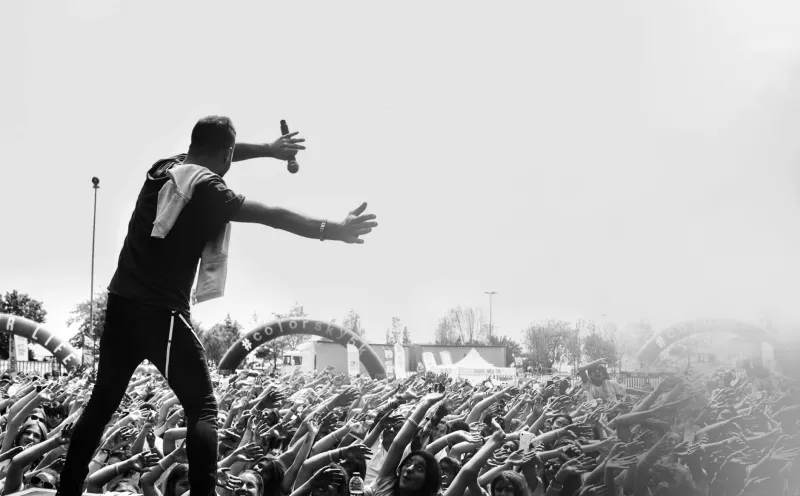
Let's talk about the difference between having fans and having devotees.
Fans stream your music. Devotees tattoo your lyrics on their bodies. Fans might catch your set at a festival if the timing works out. Devotees drive four hours, buy a ticket to a show in a city where they don't know anyone, and cry in the parking lot afterward because something you said from the stage felt like it was meant specifically for them.
That second category isn't built through a content calendar. It's built through something a lot harder to manufacture — genuine human connection at scale.
Why Some Artists Create Obsession and Others Create Mild Interest
This isn't a mystery, even though it kind of feels like one. The artists who inspire deep, lasting loyalty — the ones whose fan communities take on a life of their own — share a few consistent traits that have nothing to do with production budget or social media follower counts.
They make their audience feel recognized. Not just entertained. Not just impressed. Actually seen, in the way that makes you want to tell someone "this artist gets it" without being able to fully explain what "it" is.
Psychologically, what's happening here is a form of parasocial relationship — the one-sided emotional bond that forms between an audience member and a public figure. Parasocial relationships are a normal, healthy part of how humans engage with media and culture. The key distinction is whether an artist leans into that dynamic in a way that feels exploitative or in a way that feels genuinely reciprocal, even when it technically isn't.
The artists who build the most fiercely loyal communities tend to be the ones who give fans something to be part of. Not just something to consume.
Vulnerability Is the Entry Point
You cannot shortcut this part. The connection that turns a casual listener into someone who follows your entire career — who shows up, who tells their friends, who buys the vinyl and the merch and the ticket — almost always starts with a moment of genuine vulnerability.
Not performed vulnerability. Not the kind of "opening up" that's been carefully workshopped to hit the right emotional beats without actually revealing anything real. Audiences, especially younger ones, have very good radar for the difference.
Real vulnerability is specific. It's the lyric that's almost too embarrassing to include because it's too personal. It's the interview answer where you say something true instead of something strategic. It's the show where something goes sideways and you don't pretend it didn't. Those are the moments people remember. Those are the moments that make someone feel like they actually know you.
The risk, of course, is that real vulnerability actually costs something. You're giving people access to something true. That can feel scary. It's supposed to. That's how you know it's real.
The Architecture of Belonging
Once you've created that initial point of connection, the next layer is giving fans a place to belong. This is where community building comes in — and it's worth thinking about it more deliberately than most artists do.
A fanbase that has a shared identity — a name, an inside language, a set of references that feels exclusive to people who've been paying attention — becomes self-sustaining in a way that a passive audience never does. Beyoncé's Beyhive. Swifties. Phish's Phishheads. These aren't just marketing labels. They're actual communities with their own culture and social norms and rituals. People don't just love those artists. They love being in those communities.
You don't have to be at that scale for this to apply to you. Even a small, tight fanbase can develop that kind of identity. It usually starts with a few deliberate moves:
Name the community. Give your fans something to call themselves. It sounds simple but it's actually quite powerful. It shifts the relationship from "people who like my music" to "a group of people who share something."
Create shared reference points. Running jokes, recurring themes, callbacks to earlier work, Easter eggs in releases — all of this rewards the fans who've been paying close attention and gives them something to recognize each other by.
Build in moments of genuine access. Not everything has to be public-facing content. Voice memos, early listens, behind-the-scenes glimpses, Q&As that actually go somewhere real — these create a sense of intimacy that mass broadcast content can't replicate. Patreon, Discord, even a thoughtfully written email newsletter can do this work.
The Line Between Mystery and Accessibility
Here's the tension that every artist has to navigate: fans want to feel close to you and they want to feel like you're somewhat beyond their reach. That sounds contradictory. It's not.
Mystery is part of what makes someone worth being obsessed over. If you're fully transparent about everything — every opinion, every creative decision, every mood — there's nothing left to imagine. And imagination is a huge part of how fan devotion works. People fill in the gaps with their own projections, and those projections often make the connection feel more personal than anything you could deliberately engineer.
The balance looks something like this: be genuinely open about the things that matter — your creative process, your struggles, your values, your weird specific interests. But don't feel obligated to fill every silence. Let there be things people wonder about. Not because you're being strategic, but because some things are just yours.
What to share freely: creative process, personal values, genuine reactions, specific influences, the messy human stuff that makes you real.
What you can hold back: every opinion on every thing, your entire private life, the constant internal monologue. You're an artist, not a livestream.
The Difference Between a Cult of One and a Cult of Personality
There's a version of this that goes wrong — where the artist becomes so central to their fan community's identity that the dynamic tips into something unhealthy. Where fans feel entitled to access, where boundaries get blurry, where the artist feels trapped by the persona they've built.
The antidote to that is staying grounded in who you actually are. The goal isn't to build a community around a carefully constructed image. It's to build one around something true about you — your actual creative vision, your real values, the work you're genuinely proud of. When the community is built on something real, it can grow and shift as you do. When it's built on a persona, you end up locked inside it.
The artists who sustain deep fan loyalty over long careers aren't the ones who never change. They're the ones whose fans trust that the change is real — because they've always been honest about who they are.
That trust is the whole thing. Build that, and the rest follows.