Say What You Make: A Pitch That Doesn't Apologize for Itself

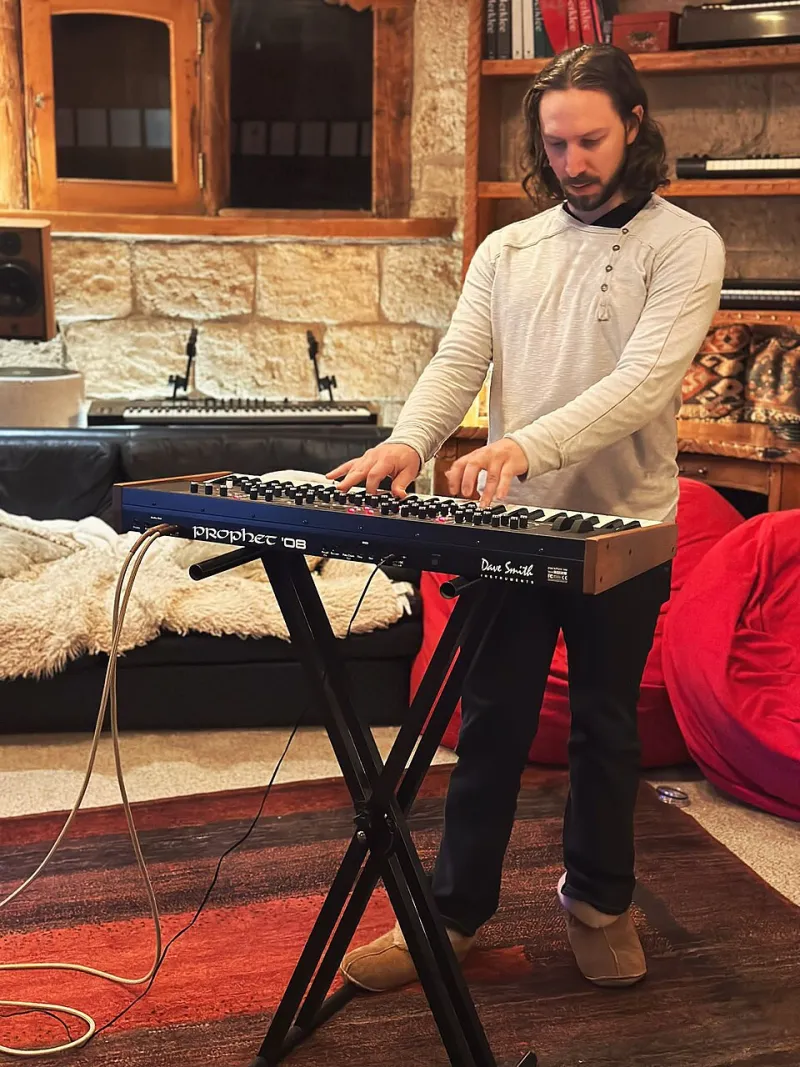
Photo: Rapculture03, CC0, via Wikimedia Commons
The most common sentence in this industry, spoken with a small apologetic laugh, is some version of: “It's kind of hard to describe, honestly.”
Everybody understands why. Describing your own work feels like describing your own face. Do it badly and you sound delusional; do it well and you sound like a commercial. So most artists land somewhere in the middle — vague, self-deprecating, and forgettable — and then wonder why the booker never followed up.
Here is the thing nobody tells you: the person across the desk does not want a description of your soul. They want to know what they are buying, in the amount of time it takes an elevator to travel four floors.
The Spine: One Sentence, No Adjectives
The foundation of every pitch you will ever give is a single sentence that names what you do and what it sounds like, with no mood words in it. No “ethereal,” no “genre-defying,” no “raw and honest.” Adjectives are where pitches go to die, because they ask the listener to do the work.
Instead, use nouns and verbs and a comparison:
A four-piece from Dayton that plays fast, short, guitar-forward songs with three-part harmony — for people who miss early Rilo Kiley.
That is twelve seconds of speech and it does more than most 400-word bios, because it answers three questions at once: what is it, where is it from, and what does it sit next to in the listener's head. The comparison is not a compromise. It is a door.
The 30-Second Version
Once the spine exists, build outward. Thirty seconds, spoken at the pace of natural conversation, is about seventy words. It should hold four pieces of information in this order:
- What it is — the spine, unchanged.
- One proof of motion — a sold-out basement show, a support slot, a song on a regional station, a run of dates, a number that is small but real.
- One thing you want — a slot on the bill, a feature, a review, a meeting.
- A clean exit — where they can hear it, in one click or one phrase.
That is it. No origin story. No childhood piano lessons. The origin story is a reward for people who ask a second question, and if you lead with it, there will not be a second question.
The Three-Length Ladder
Practice your pitch at three lengths so you are never caught at the wrong altitude:
- The twelve-word version. For the stranger at the bar, the friend of a friend, the person who asks what you do while looking at the exit. One sentence, then a question back to them. Conversations are not auditions.
- The thirty-second version. For the booker, the festival contact, the radio programmer, the collaborator's manager. Practiced until it does not sound practiced.
- The ninety-second version. For the interview, the podcast, the panel. This is where the why finally fits — the thing that made you start, and the thing that keeps this project moving now.
Your Bio Is Not a Resume
Most artist bios read like a LinkedIn page with worse formatting: a list of towns, a list of opening slots, a list of degrees. None of it tells a stranger what the music feels like to stand in front of.
Write the short bio — the 100-word one — with a single job: get someone to press play. Put the comparison in the first line, put one vivid concrete detail in the middle, put the current thing at the end. Save the full history for the 250-word version, which exists mostly for press and grant applications and should be written in third person so other people can copy-paste it without editing.
And please date-stamp it. An undated bio is a bio nobody trusts.
The One-Pager That Respects the Reader
One page, five blocks, no more:
- Header: name, genre-in-plain-English, city, contact email, and the three links that matter — one streaming link, one video, one social. Not seven links.
- The short bio: 100 words.
- Two or three quotes: a review, a radio mention, a line from a booker. Real ones, attributed, linked.
- Proof of motion: upcoming dates, past rooms with capacities, anything with a number attached.
- One photo: high resolution, credit included, landscape and portrait versions available on request.
That is a complete kit. If a booker has to scroll, you have already lost a minute of their attention you will not get back.
Practice, Don't Rehearse
There is a smell to an over-rehearsed pitch — the smoothness of something memorized, delivered at slightly wrong speed. The fix is not to loosen up; it is to practice in front of actual humans until the words stop being a script and start being a habit.
Say it to a friend at dinner. Say it to a bartender. Say it to three different people at a showcase and notice which sentence makes them lean in. Cut everything that does not cause a lean-in. Keep the rest.
Because the pitch is not a performance of humility, and it is not a sales job either. It is the shortest true sentence you can say about your work out loud. Get that sentence right and the rest of the conversation takes care of itself.