Old Demos Aren't Ghosts: Reworking the Songs You Buried
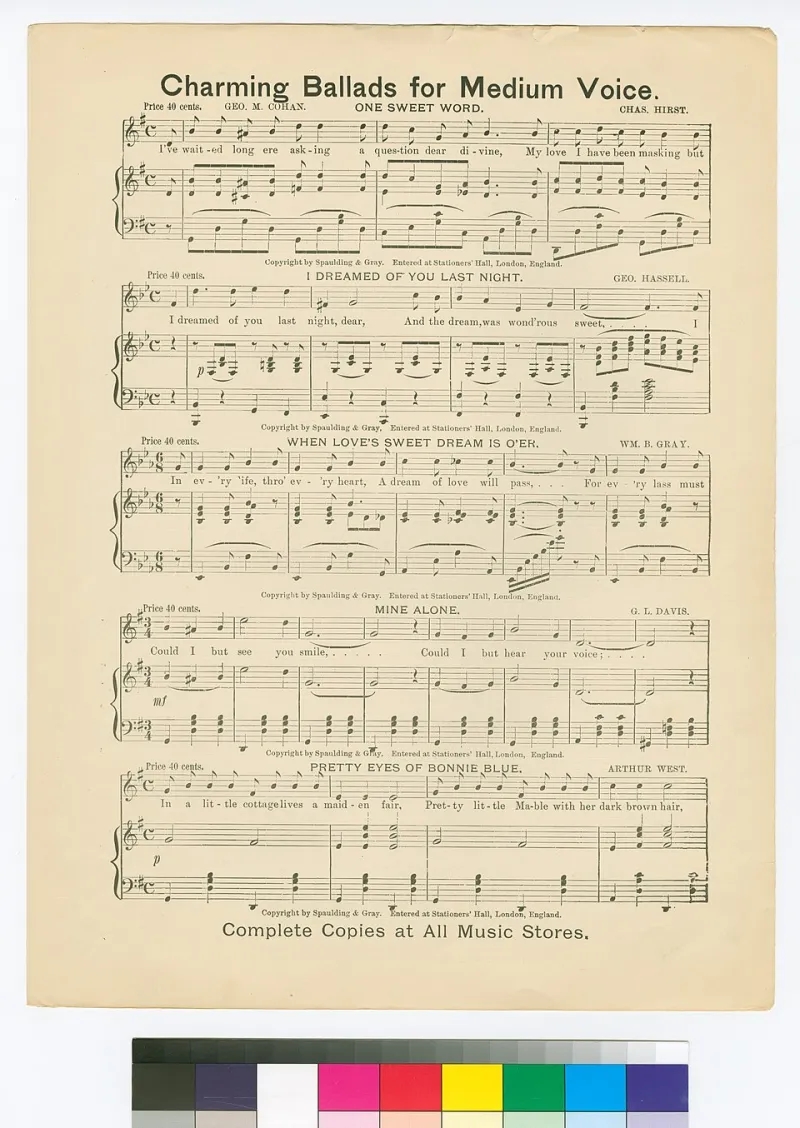
Photo: Scan by NYPL, Public domain, via Wikimedia Commons
I have a folder on an external drive labeled, with great originality, “OLD.” Inside are sixty-some demos, most of them recorded between 2013 and 2018, most of them bad in ways I could not have identified at the time. For years I opened that folder the way you open a box of photographs from a terrible haircut: quickly, with a wince, and then closed it again.
I was wrong about what was in there. Not entirely — a lot of it is genuinely bad — but wrong about what the folder is for.
The Cringe Is a Timestamp, Not a Verdict
The embarrassment you feel listening to your old work is almost never about the song. It is about the distance between who made it and who is listening. That voice is too loud, that lyric is too literal, that arrangement is a pale imitation of whatever you were listening to at the time. All true. Also irrelevant, because the person who made it did not have the information you have now, and you only have that information because they made it.
Treat the cringe as a timestamp. It tells you precisely how far you have moved. What it does not tell you is whether the song was any good, which is a completely separate question — and one you are now better equipped to answer than you were the day you gave up on it.
Why the Old Stuff Sounds Wrong (That's the Useful Part)
There is a specific reason old demos feel unusable: they were built for a version of you that no longer exists. The tempo was chosen for hands that have since gotten better. The key was picked for a range you have since stretched. The arrangement is dense because you were afraid of silence then, and now you are less afraid of it.
None of that is damage. It is a set of instructions about what to change. A song that sounds wrong at 138 BPM in the original key might be perfect at 104 in a key a step down, played by four people instead of one laptop. The song was never the problem. The container was.
Three Ways to Bring a Song Forward
1. Change one variable at a time. Take the old demo into a rehearsal and change exactly one thing — tempo, or key, or instrumentation — then play it. If it comes alive, change a second thing. If it still sounds like a museum piece, you have learned something cheap and fast.
2. Strip it to the skeleton. Play the old song with one instrument and voice, no effects. Whatever survives that is the actual song. Everything that does not survive was production, not writing, and production can be rebuilt.
3. Steal the good part and write a new song around it. Sometimes the honest answer is that the two-minute demo contains eleven seconds of something real — a bridge, a guitar figure, one line — and the rest is scaffolding. Take the eleven seconds. Build a new house.
Anniversary Releases, Done With Intention
The temptation when revisiting old material is to make it an occasion. Ten years, a deluxe edition, a vinyl pressing, a campaign. Sometimes that is right. More often it is a lot of money and effort spent to reach the fourteen people who bought the original.
If you are going to release something old, be specific about why. A demo drop on Bandcamp with a paragraph of honest liner notes does more for a small audience than a half-hearted anniversary push. A live re-recording of a song you have grown into is a genuinely new document, not a reissue. A B-side collection with real sequencing and a reason to exist is a record. A reissue with nothing added is a receipt.
And there is no law that says the revisit has to be public. Sometimes the point is simply to reclaim a song for the live set — play it again after six years, feel the room, decide whether it belongs. Some of the most useful work you do with old material never gets released at all.
What Belongs in the Vault
Not everything deserves a second life, and pretending otherwise is its own kind of dishonesty. Two questions will filter most of it:
- Does it still say something you would defend out loud? If you would apologize before playing it, do not play it.
- Is it unfinished, or is it done and just not good? Unfinished is work. Not good is a closed file. Give yourself permission to recognize the difference and stop reopening the second category.
A Rule for Revisiting
Once a year, take one afternoon. Open the folder. Listen to everything at low volume while doing something else, and write down the titles that make you stop what you are doing. Do not evaluate, do not fix, do not judge. Just make the list.
Then pick one. Not five — one. Take it to rehearsal. Change one thing. See what happens.
The archive is not a museum and it is not a graveyard. It is a workbench, and everything on it is still warm.