Build a Set That Haunts Them on the Ride Home
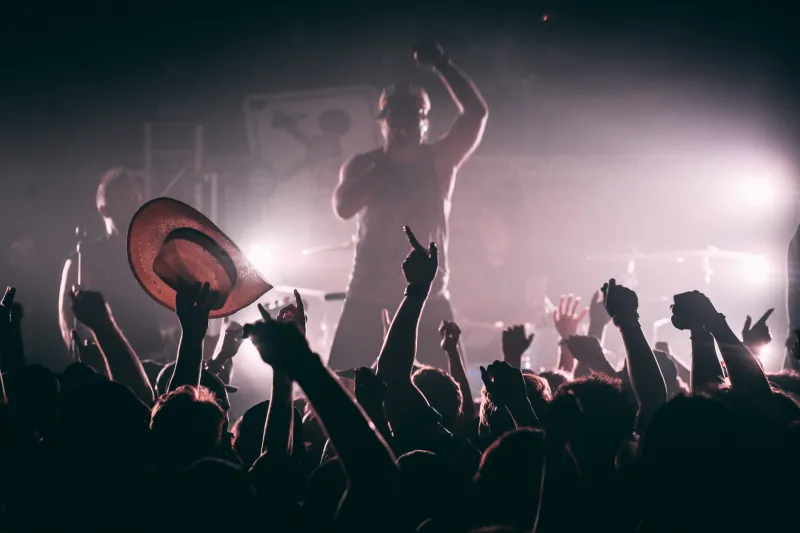
Most independent shows are not bad. They are just flat. Five songs, a mumbled thank-you, another five songs, a shrug, and a merch table. The songs might be strong, the band might be tight, and the room might even be full. But by the time everyone gets to the parking lot, the night has already dissolved.
The artists people talk about on the drive home are usually not doing anything magical. They are sequencing. They are treating a 45-minute set like a short story with a beginning, a turn, and an ending that lands. That is a craft skill, and it is learnable.
Start With an Invitation, Not a Count-In
The first 90 seconds decide how the room reads you. If you open with your quietest, most inward song, you are asking a crowd that does not know you yet to do a lot of emotional work. If you open with your loudest song, you burn the ceiling before anyone has a reason to look up.
Open with an invitation. That can be a short, direct hello. It can be a single sustained note. It can be a rhythm that starts in the room before the band fully arrives. The point is to create a doorway instead of a wall. Pick an opener that says: come in, this is what the night feels like.
A practical rule: your first song should be the one you would play for someone who has never heard you and might leave after one song. It should be clear, confident, and a little bit welcoming. Save the deep cut for later, when you have earned the room's patience.
The Midpoint Is a Trapdoor
Around song four or five, attention dips. People check their phones, drift toward the bar, start talking. This is not a failure of your music. It is just human rhythm. The fix is to build a midpoint turn—a moment where the show changes shape.
That turn can be a stripped-back song with no drums. It can be a cover that reframes one of your own songs. It can be a story that introduces the next track and gives it a job. It can even be a pause where you step away from the mic and let the room breathe.
The trapdoor should feel intentional. Do not announce it with a long explanation. Just change the temperature. The crowd will feel the shift before they understand it.
Banter Is a Bridge, Not a Solo Set
Stage banter gets a bad reputation because most of it is nervous filler. But a few well-placed sentences can turn strangers into participants. The trick is to keep it short, specific, and connected to the songs.
Say why the next song exists. Mention the town you are in without pretending it is your favorite place on earth. Tell the room what you want them to do—sing the last line, clap on the backbeat, hold a phone light up if that is the vibe. Give them one clear job.
Avoid the apology loop. Do not tell the crowd you are sick, under-rehearsed, or not sure how this one goes. They came to trust you for 45 minutes. Give them a reason to.
Build a Peak You Can Actually Reach
Every set needs a high point, but the peak is not automatically your fastest or loudest song. The peak is the moment where the room's attention and your performance line up. That usually happens after you have built some contrast.
A simple shape: open bright, drop into something intimate, bring the energy back in a different color, then hit the peak. If every song is at a 10, the audience has nowhere to go. If you give them a 4, a 6, and then an 8, the 9 feels enormous.
Put your strongest live song near the end, but not at the very end. You want one more move after the peak—a landing, not a cliff.
Visuals Should Do a Job
You do not need a production budget. You need one or two visual moments that make the night feel like an event. A single lamp that changes the room's color. A banner that gets unrolled at the midpoint. A handwritten lyric sheet passed out for the last song. A moment where the band steps away from the pedals and sings without microphones.
The test is simple: does the visual help the story, or is it just decoration? If it does not change how the room feels, cut it. A small, well-timed choice beats a busy backdrop every time.
The Encore Is a Promise
If you are lucky enough to get an encore, do not treat it like a victory lap. Treat it like the last line of the story. Play the song that sends people out with the feeling you want them to carry. If the set was loud, end quiet. If the set was inward, end with a burst of release. If the set was a party, end with something that feels like a group hug.
And then get offstage. Do not linger, do not over-thank, do not explain the symbolism. Let the room sit with the ending. The drive home is where the show keeps happening. Give them something to replay.