The Voice That Never Shuts Up: Living With Creative Self-Doubt Without Letting It Win

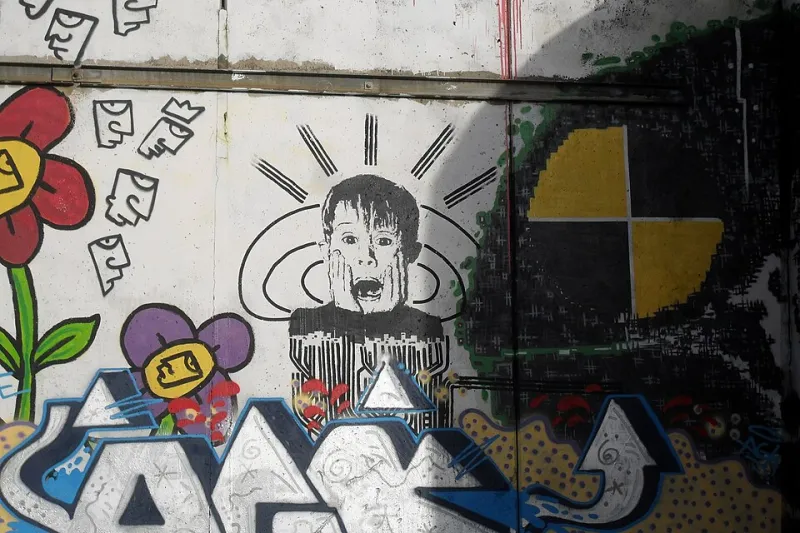
Photo: Martin Bravenboer, CC BY 2.0, via Wikimedia Commons
The Critic in the Room Nobody Talks About
Here's a secret the music industry and the art world don't exactly advertise: the doubt doesn't go away when you get good. It shifts. It gets quieter sometimes, louder others. But it never fully clocks out.
If you've ever finished something you're genuinely proud of and immediately thought, someone's going to figure out I have no idea what I'm doing — welcome to the club. It's a big one. Grammy winners are in it. Bestselling authors are in it. The painter whose work sells out in the first hour of a gallery show? Still in it.
Imposter syndrome isn't a sign that you're not cut out for this. It's practically a job requirement.
But here's where it gets complicated: not every whisper from that inner critic is a lie. Some of it is useful. Some of it is your brain trying to protect you from genuine blind spots. Learning to sort the noise from the signal — that's the actual work.
How It Shows Up Differently Depending on What You Make
Self-doubt is sneaky because it shapeshifts depending on your medium.
For musicians, it often lives in comparison. You post something and immediately think about the artist who does the same thing but better. You hear a chord progression you love and wonder if your own stuff sounds derivative. The voice says: you're not technical enough, emotional enough, original enough. It's relentless.
For visual artists, it tends to attach itself to legitimacy. Did you go to art school? Do you know the right people? Are you selling work, or just making it? There's this invisible hierarchy in the visual art world that imposter syndrome loves to weaponize against you. The voice asks: who told you this was art?
For writers, it often shows up as paralysis before the page is even touched. The blank document becomes evidence that you have nothing real to say. Every sentence feels either too simple or too try-hard. The voice insists: real writers don't struggle this much.
Different mediums, same trap. The delivery changes but the core message is identical — you don't belong here.
The Difference Between Imposter Syndrome and Legitimate Feedback
This is the part most people skip over, and it matters a lot.
Imposter syndrome is not the same thing as constructive self-assessment. Conflating the two is how people either ignore real growth opportunities or spiral into paralysis over nothing.
Here's a rough framework that helps:
Imposter syndrome sounds like:
- "I'm not good enough to be doing this at all."
- "Everyone else knows something I don't."
- "If people really knew me, they'd see through it."
- "My success was luck, not skill."
Legitimate feedback sounds like:
- "This specific section isn't landing the way I want it to."
- "I could develop this technique further."
- "The bridge feels disconnected from the rest of the song."
- "I want to push this idea further before I share it."
Notice the difference? One is sweeping and identity-based. The other is specific and craft-based. Imposter syndrome attacks you. Real feedback addresses the work.
When you feel that critic revving up, ask yourself: is it pointing at something I can actually fix, or is it just telling me I shouldn't be here? If it can't give you a concrete note, it's not feedback. It's noise.
Why Successful Artists Never Fully Escape It
This is the part nobody wants to hear, but it's important: the doubt scales with your ambition.
When you were starting out, the stakes were low. You were playing open mics for twelve people. You were posting your writing on a Tumblr nobody read. The risk of being "found out" felt manageable because the audience was small.
As you grow, the audience grows. And the voice in your head — the one cataloging all the ways you don't deserve this — gets louder in proportion. More people watching means more people who could potentially see through you. That's the math imposter syndrome runs.
The artists who sustain long careers don't do it because they finally feel confident. They do it because they stopped waiting for confidence to arrive before they showed up. They built a relationship with their doubt that wasn't about elimination. It was about coexistence.
Beyoncé has talked about stage fright. Lizzo has been open about the years she spent convinced she wasn't enough. These aren't people who broke through to some doubt-free promised land. They're people who kept going anyway.
Building Resilience Instead of Waiting for Certainty
So if the doubt isn't going anywhere, what do you actually do with it?
Name it, don't feed it. When that voice shows up, try calling it out out loud (or on paper). "Oh, that's the imposter thing again." Naming it creates distance. It stops being you and starts being a thing that's happening to you — which is a much easier thing to work with.
Build an evidence file. Keep a running document — a note on your phone, a journal, whatever — of moments where you did the thing and it worked. The message from a fan that hit you in the chest. The time you finished a song you thought you couldn't. The piece that got picked up. When the doubt flares up, you have receipts.
Separate your identity from the outcome. Your worth as a person is not contingent on how a song performs or whether a piece gets accepted. This sounds obvious and is almost impossible to actually live, but practicing the separation — even imperfectly — is what keeps you in the game long-term.
Find your people. Imposter syndrome thrives in isolation. It loves to convince you that everyone else has it figured out and you're the only one struggling. Community — real, honest community with other creators — dismantles that lie fast.
The Real Work Underneath the Doubt
Here's what I keep coming back to: the fact that you doubt yourself so fiercely is, in a strange way, evidence of how much you care. People who don't care about their work don't agonize over whether it's good enough.
The doubt and the devotion come from the same place.
You don't have to wait until you feel like you belong to start acting like you do. You don't have to silence the voice before you hit publish, press record, or hang the work on the wall. The artists who make it aren't the ones who stopped being afraid. They're the ones who shipped it scared anyway.
The toughest critic in the room is always going to be you. But you're also the only one who gets to decide whether that critic runs the show.