Ten Years in the Dark: What 'Overnight Success' Actually Looks Like Up Close
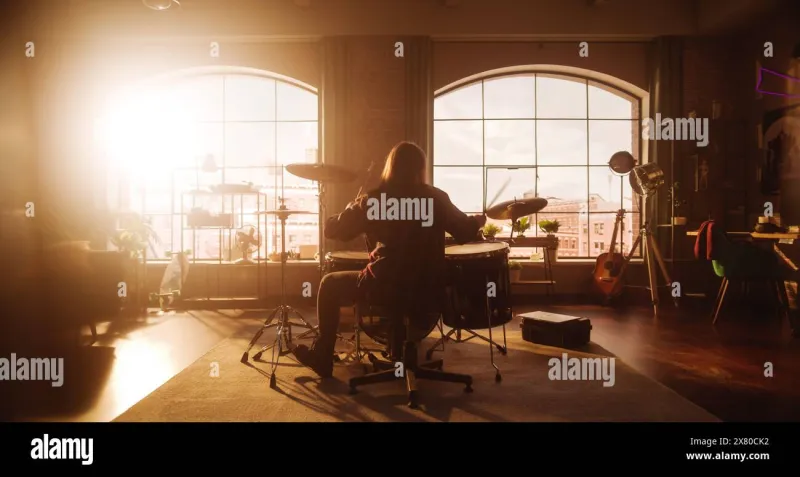
Photo: musician practicing alone rehearsal studio determination, via c8.alamy.com
Somewhere right now, there's an emerging artist watching a peer blow up — a song goes viral, a label comes calling, a profile in a major publication lands — and thinking some version of the same thought: Why not me? Why not yet? Am I doing something wrong?
It's one of the most universal experiences in creative life, and also one of the most quietly destructive. Because the story we tell about creative breakthroughs — the sudden discovery, the right-place-right-time moment, the overnight sensation — is almost always a lie. Or at least, a very incomplete truth.
Understanding what's actually behind those "sudden" moments isn't just comforting. It's strategically useful.
The Edited Highlight Reel We Call a Career Story
When a publicist or a journalist tells the story of an artist's rise, they're not telling the whole story. They're telling the most compelling version of it — the one with a clear arc, a dramatic turning point, a before and after. The ten years of playing half-empty venues, the demos that went nowhere, the day jobs and side hustles and near-quits? Those get compressed into a single sentence, if they make it in at all.
This isn't malicious. It's just how storytelling works. We compress timelines. We spotlight the peak. We skip the years of building because they don't make for a clean narrative.
But for every artist living in those in-between years — which is most of us, most of the time — the compressed version of other people's stories creates a deeply distorted benchmark. You start measuring your year five against someone else's year twelve, except you don't know it's their year twelve because nobody told you.
What the Research Actually Shows
Malcolm Gladwell's popularization of the "10,000 hours" concept pointed at something real: expertise, in almost any domain, takes a very long time to develop. But in creative fields specifically, the timeline to momentum — not just skill, but actual audience traction — tends to be even longer than people expect.
Research on creative careers consistently shows that most artists who achieve significant recognition do so after a decade or more of active work. A 2019 study published in Nature that analyzed the careers of scientists, directors, and artists found that a "hot streak" — a period of outsized creative output and recognition — can happen at any point in a career, but it almost always follows years of quieter, less celebrated work. The hot streak doesn't come out of nowhere. It comes out of the accumulated foundation.
Look at the artists who feel like cultural institutions now. Brandi Carlile released her first album in 2005. Her Grammy-winning breakthrough came in 2018 — thirteen years later. Chance the Rapper released mixtapes for years before Coloring Book changed his trajectory. Even Taylor Swift, who seems like she was always famous, spent years grinding the Nashville circuit before her first album dropped. The pop star we know is the product of a decade of work that preceded her becoming a household name.
None of this is to say your timeline will be exactly ten years. Some people move faster. Some slower. But the idea that real creative traction happens quickly is statistically rare, not the norm.
Why the Myth Actively Harms You
The overnight success narrative doesn't just set unrealistic expectations. It actively warps how you experience your own progress.
When you believe that real breakthroughs happen fast, every year that passes without one starts to feel like evidence that you're not good enough, not working hard enough, or not meant for this. You start treating the long middle as a waiting room instead of recognizing it for what it actually is: the place where the work gets made.
The long middle is where you figure out what you actually sound like. It's where you develop the craft, the stage presence, the creative voice that will eventually make people stop scrolling. It's where you build the relationships — with collaborators, with small but loyal audiences, with the industry people who will one day matter — that make a "sudden" breakthrough possible.
When you're in the thick of it, the long middle feels like stagnation. From the outside, years later, it looks like foundation.
Reframing the Timeline as an Asset
Here's a perspective shift worth sitting with: the artists who build slowly tend to build more durably. The ones who blow up overnight without the foundation in place often find themselves unable to sustain the momentum, because the craft and the audience relationship and the creative identity weren't fully formed when the spotlight found them.
Years of building quietly give you something that fast success can't: you know who you are as an artist before the world has opinions about it. You've made your mistakes in relative obscurity. You've had time to figure out what you actually want to say, not just what seems to be working right now.
That's not a consolation prize. That's a genuine competitive advantage.
What to Do With the Middle
If you're in the years that feel invisible, here are a few things worth holding onto:
Measure progress differently. Streams and followers are real metrics, but they're not the only ones. Are you getting better? Is the work more honest than it was two years ago? Are you building relationships with people who genuinely care about what you make, even if the number is small? These things compound. They matter.
Stop comparing launch points. When you see someone else's success, you're almost never seeing the full timeline. You're seeing the visible part. Remind yourself of that every single time the comparison reflex kicks in.
Treat consistency as the strategy. The single most reliable predictor of creative momentum is just staying in it long enough. Not going viral, not getting signed, not landing a sync deal — staying. Every artist who eventually breaks through did it by not quitting during the years when quitting would have been completely reasonable.
Document the middle. Take notes. Keep the early recordings. Save the emails from the small venues. Not because it'll make a good origin story later (though it might), but because having a record of your own progress helps you see it clearly when the day-to-day makes it invisible.
The Long Game Is the Only Game
There's something almost countercultural about choosing to build slowly in an era that worships the instant. Every part of the internet is designed to reward the viral moment, the quick hit, the content that performs right now. Choosing to care more about who you'll be as an artist in ten years than about what's working this week is genuinely radical.
But it's also where the real careers are built.
You're not behind. You're not failing. You're in the part of the story that doesn't make the press release — which means you're exactly where almost every artist you admire once was.
Keep going.