You Belong Here: Dismantling the 'Not Good Enough' Story You Keep Telling Yourself
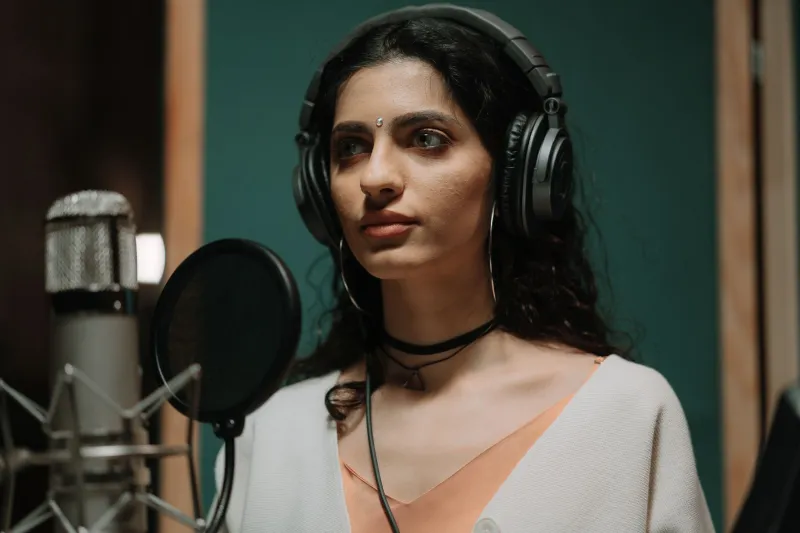
At some point, almost every creative person has stood at the edge of something — a stage, a studio session, a blank page — and heard that voice. Who do you think you are? It's sharp and familiar, and it usually arrives right when you're about to do something that actually matters.
For some people it's a whisper. For others it's practically a roar. But the message is the same: You're not good enough. You don't belong here. Real artists are different from you.
That voice has a name in psychology — it's called the impostor phenomenon, though most people just call it impostor syndrome. And while the term has gotten a little overused, the experience it describes is genuinely real and genuinely damaging. It keeps talented people silent. It keeps authentic voices from ever reaching the people who need them.
Where the Story Comes From
Limiting beliefs about creative identity don't materialize out of nowhere. They tend to have origins — specific moments, specific people, specific messages that got absorbed somewhere along the way.
Maybe a teacher told you that music was a nice hobby but not a realistic career. Maybe you grew up in a household where art wasn't taken seriously. Maybe the first time you shared something you made, the response was silence, or worse, laughter. Maybe you've spent years consuming music made by incredibly talented people and concluded that the gap between their work and yours is simply too wide to cross.
These experiences leave marks. And over time, they calcify into narratives — stories we tell ourselves so automatically that we stop recognizing them as stories at all. They start to feel like facts.
But they're not facts. They're interpretations. And interpretations can be rewritten.
The Identity Gap
One of the most interesting things about creative self-doubt is how often it lives in a gap between two identities: who you are right now, and who you think a "real artist" is supposed to be.
That gap is almost always fictional. The "real artist" you're comparing yourself to is usually a composite — part celebrity, part myth, part social media projection. They don't struggle the way you struggle. They don't doubt the way you doubt. They were simply born with it.
Except they weren't. And they do.
Kendrick Lamar has talked about the weight of expectations and the fear of not living up to his own standards. Adele has been open about crippling stage fright. Amanda Palmer built an entire career on radical vulnerability and still wrote a whole book about the terror of asking for help. The internal experience of being a working artist is almost universally messier than the external presentation suggests.
The gap isn't between you and "real artists." It's between the inside of your experience and the outside of everyone else's.
Deconstructing the Narrative
If you want to rebuild your sense of creative identity, you first have to get specific about the story you're currently running. Vague feelings of inadequacy are hard to challenge. Concrete beliefs are much easier to examine.
Try this exercise: take a piece of paper and finish these sentences without filtering yourself.
- I'm not a real artist because...
- People like me don't...
- I'd put my work out there if only...
- I'm waiting until...
Read what you wrote. Then ask yourself: Where did this come from? Is this actually true? What evidence contradicts it?
Chances are, you'll find that at least some of your "not good enough" beliefs are based on outdated information — things you absorbed years ago that no longer reflect who you are or what you're capable of.
Claiming the Title
Here's a small but powerful practice: start calling yourself an artist. Out loud. Without qualifiers.
Not "I'm kind of trying to do music." Not "I write songs but I'm not really a songwriter or anything." Just: I'm a songwriter. I'm a musician. I'm an artist.
This isn't fake-it-till-you-make-it nonsense. It's about recognizing that identity isn't something you earn after a certain number of streams or a certain level of external validation. It's something you inhabit. You're an artist the moment you commit to making art — not the moment the industry decides to acknowledge it.
Language shapes belief. The way you talk about yourself, even casually, reinforces or undermines your internal story. Changing the words is a real first step toward changing the framework.
Building Evidence for the New Story
Once you've started dismantling the old narrative, you need to replace it with something built on actual evidence. Not hype. Not delusion. Real, documented proof that you are capable and growing.
Keep a creative wins journal. It doesn't have to be elaborate — a note on your phone works fine. Every time you finish something, every time someone connects with your work, every time you take a creative risk that scares you, write it down. Over time, you build a record that your brain can actually reference when the doubt shows up.
Because the doubt will show up. Even after you've done the work, even after you've rewritten the story, that voice will still occasionally knock on the door. The difference is that you'll have evidence to show it why it's wrong.
You Were Always Supposed to Be Here
The music industry, the art world, the creator economy — none of these spaces have a fixed guest list. There's no committee deciding who's allowed to make meaningful work. The gatekeeping that does exist is largely structural and financial, not a reflection of who has something worth saying.
You have something worth saying. The fact that you're still here, still making things, still wrestling with the work — that's not nothing. That's actually everything.
Claim your seat. You earned it the moment you decided to create.